If you’re searching for “fence installation” you’re probably trying to answer two questions: What will this realistically cost in New Jersey, and what will make the price move up or down?
The honest answer is that fence pricing is not one flat number. It changes based on the material, the size of your yard, the number of gates, terrain, and even how your township handles permits and setbacks. In Central New Jersey, small details like slope, property-line accuracy, and pool safety rules can change the scope quickly.
This guide breaks down the biggest cost drivers, shows you what to ask for in a quote, and helps you avoid surprises. If you want a firm number for your property, the only real way is a site visit and a measured layout.
Quick answer: what fence installation usually costs (and why NJ can vary)
Most “cost guides” you see online publish national averages. Those numbers are useful as a starting point, but they do not account for every NJ town’s requirements, site access, and local labor conditions. As a reference point, national estimates from Angi and HomeAdvisor commonly show a wide range depending on fence type, size, and complexity.
Use national averages only as a baseline, then adjust for your material, linear footage, gates, and site conditions.
Expect your estimate to change if you need zoning approval, a construction permit (pool barrier), or special setbacks.
The best quote is itemized: materials, labor, gate hardware, demolition (if replacing), and any permit support.
The biggest cost drivers in New Jersey
1) Fence material (vinyl, wood, aluminum, chain link, composite)
Material is usually the biggest pricing lever. It affects not only the panels and posts, but also hardware, reinforcement, finish requirements, and long-term maintenance.
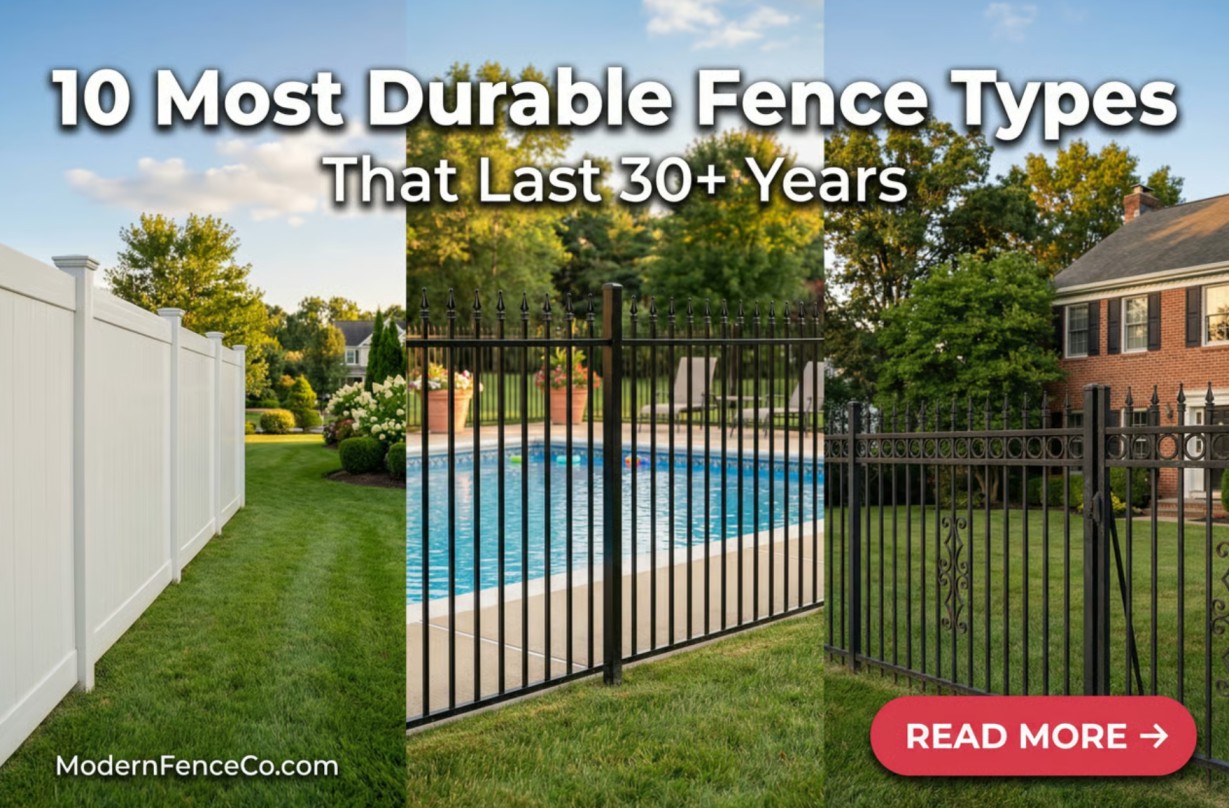
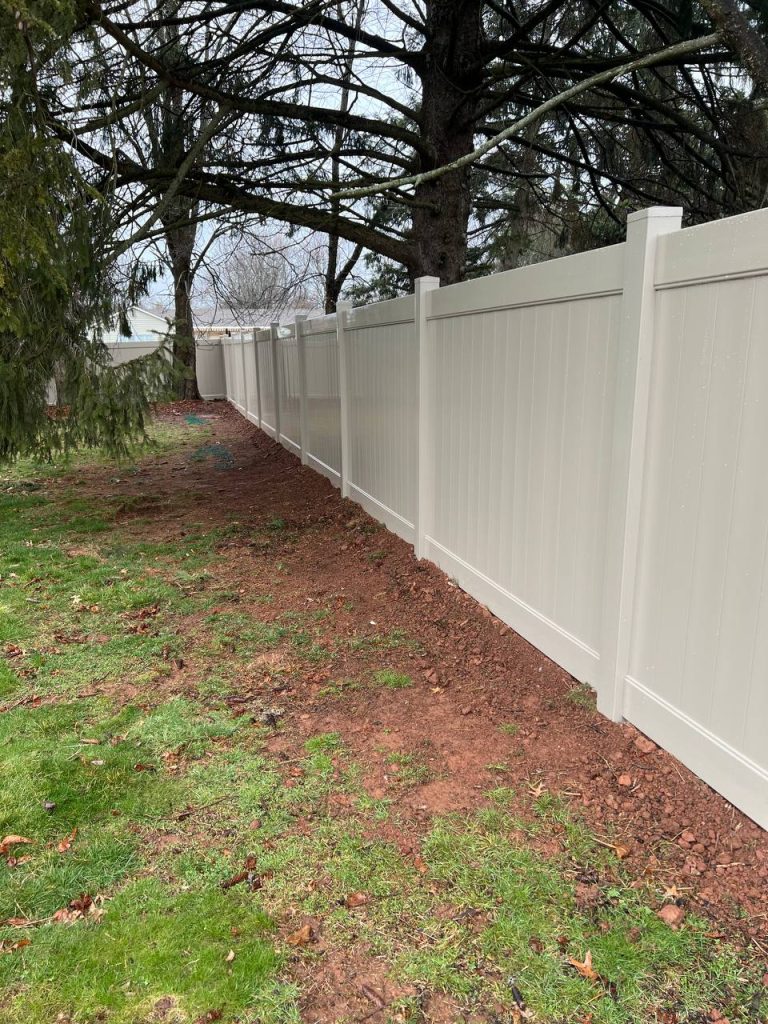
- Vinyl: typically chosen for low maintenance and strong privacy options.
- Wood: offers a classic look, but requires periodic sealing/staining in NJ weather.
- Aluminum: popular for pool enclosures and clean curb appeal.
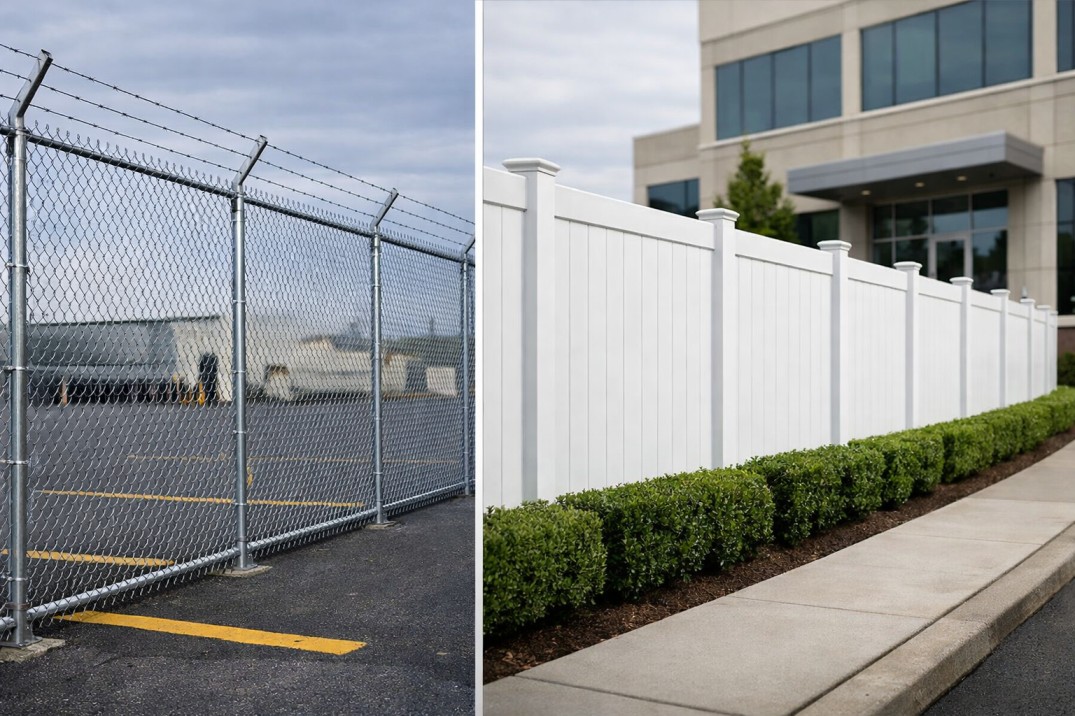
- Chain link: often the most budget-friendly for large areas and practical security.
- Composite (WPC): premium look and lower maintenance than wood, but costs more upfront.
Vinyl fence options: https://modernfenceco.com/fences/vinyl-fence/
Wood fence options: https://modernfenceco.com/fences/wood-fence/
Aluminum fence options: https://modernfenceco.com/fences/aluminium-fence/
Chain link fence options: https://modernfenceco.com/fences/chain-link-fences/
2) Linear footage and fence height
Fence quotes typically scale with linear footage. Height also matters because it affects material volume, wind load, post depth requirements, and sometimes township rules. A 6-foot privacy fence is not priced the same as a 4-foot decorative fence.
3) Gates and hardware
Gates are where many quotes diverge. A simple walk gate is very different from a wide double gate or an automated driveway gate. Hardware quality, post reinforcement, latch types, and alignment time add up fast, especially if you want smooth operation year-round.
4) Site conditions (slope, soil, access, obstacles)
Central NJ properties can vary from flat suburban lots to sloped backyards with drainage features, retaining walls, or dense landscaping. Any of these can increase layout complexity, digging time, or the need for stepped panels.
Sloped lots often require stepped or racked sections and careful alignment.
Rocky soil or heavy clay can slow post setting and increase labor.
Tight access (narrow side yards, hedges, decks) can add time and disposal complexity.
5) Replacement vs new installation
If you’re replacing an old fence, the quote may include demolition, hauling, and disposal. In many projects, removal is a meaningful part of the total cost, especially if the old fence has concrete footings or embedded posts.
Note: Modern Fence Co. focuses on new installations and full replacements, not small “patch” repairs. That matters because partial repairs often cost more per foot and can look uneven next to aged materials.
6) Permits, zoning approvals, and pool barrier rules
In New Jersey, the permit question is mostly township-specific. Some towns require a zoning permit for most fences. Pool fences are usually stricter and can trigger construction code requirements. You do not want to discover this after the fence is built.
Cost by material: what changes the price inside each category
Vinyl fencing: what affects the quote
- Panel style (privacy, semi-privacy, picket) and thickness
- Post reinforcement (especially for gates and long runs)
- Color options (white vs specialty colors)
- Custom fabrication needs (height, spacing, design details)
If you’re comparing vinyl quotes, make sure you’re comparing the same grade of vinyl and reinforcement. Low-grade panels can look fine on day one but behave differently over time.
Wood fencing: what affects the quote
- Wood species and grade (e.g., cedar vs pressure-treated)
- Fence style (stockade, board-on-board, picket)
- Finish expectations (raw vs stained/sealed)
- Ground contact and moisture management around posts
Aluminum fencing: what affects the quote
- Fence height and picket spacing (especially for pool compliance)
- Coating quality and manufacturer
- Gate count and latch type
- Terrain and layout complexity
Chain link fencing: what affects the quote
- Height, gauge, and mesh size
- Vinyl-coated vs galvanized
- Privacy slats (optional)
- Terminal posts and corner layout complexity
A practical way to estimate your project before you request quotes
You can get a rough starting estimate by measuring your perimeter and deciding on height and gate count. This is not a final price, but it helps you budget and compare apples-to-apples.
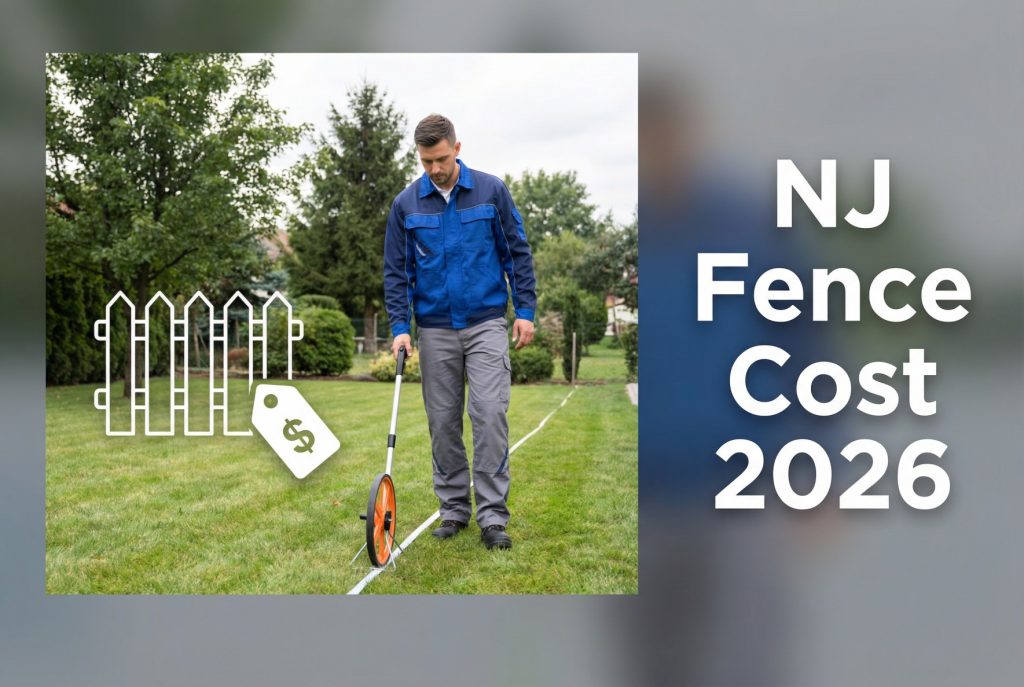
2.Measure your fence line in linear feet (LF). Don’t guess. Walk it with a tape wheel or use a property survey as a baseline.
3.Choose the fence height (4 ft, 5 ft, 6 ft are common).
4.List every gate and the approximate width (walk gates vs double gates).
5.Write down any site issues: slope, tight access, existing concrete, trees close to the line.
6.Ask each contractor to quote the same scope and show itemized costs.
Simple budget worksheet (example math, not a NJ guarantee)
| Fence length (LF) | Material (example) | Notes |
| 100 LF | Choose one material | Add 1-2 walk gates if needed |
| 200 LF | Choose one material | Large yards often benefit from a second access gate |
| 300+ LF | Choose one material | Chain link is often used for big perimeters; privacy fences cost more |
National cost ranges vary widely. Use them only as a baseline and verify locally with a measured quote.
What a professional NJ fence quote should include (so you can compare fairly)
Exact linear footage and height
Fence material, style, and manufacturer (or spec sheet)
Post setting method (depth, concrete use, reinforcement for gates)
Gate details (width, hinges, latches, self-closing if needed)
Removal and disposal (if replacement)
Timeline and payment terms
Warranty details (materials vs workmanship)
Permit support (if required by your township)
How Modern Fence Co. works (Central NJ)
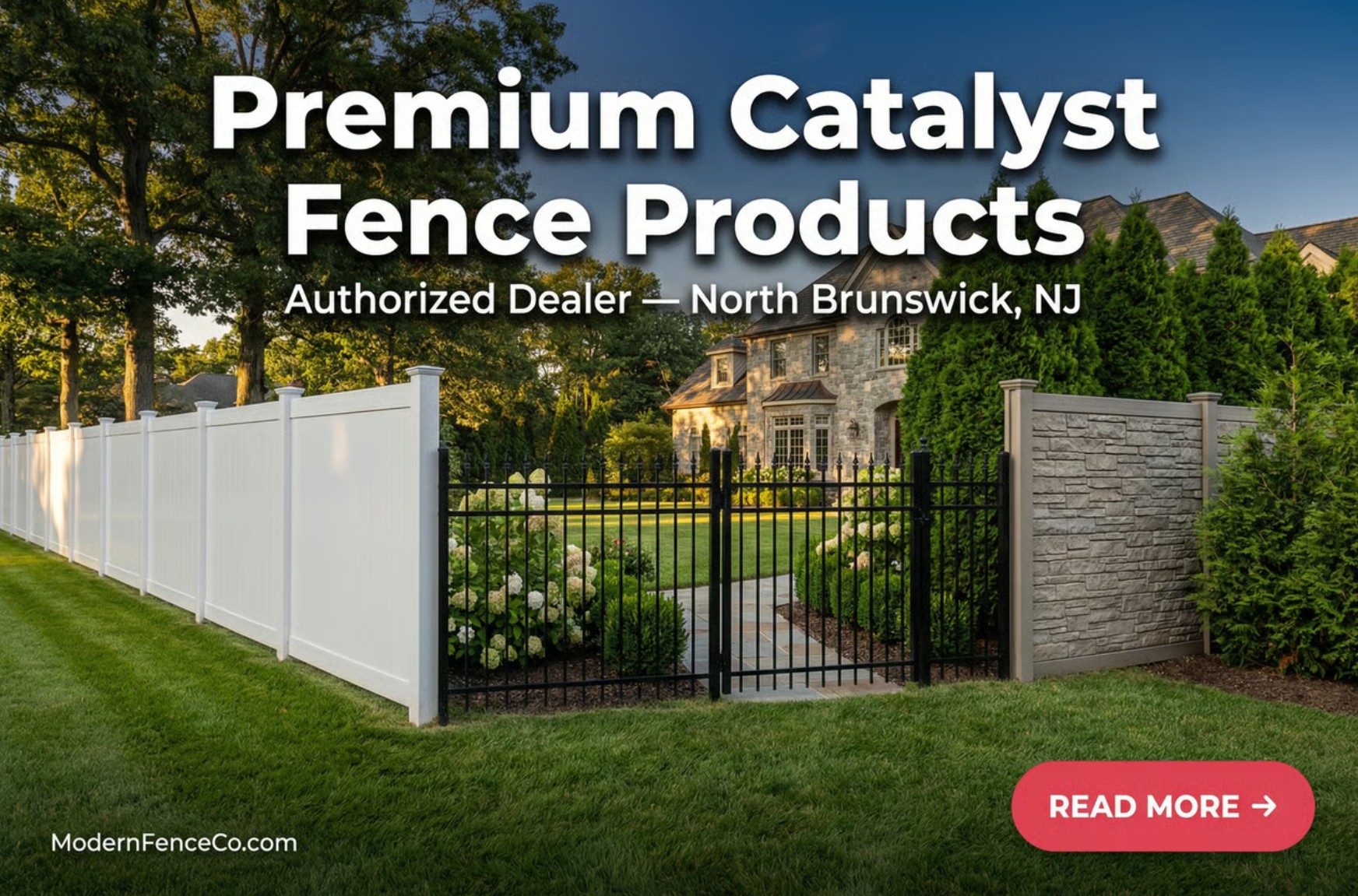
Modern Fence Co. is a family-owned manufacturer and installer based in North Brunswick, NJ. Established in 2005, the company serves Middlesex County and Monmouth County with vinyl, composite, aluminum, wood, and chain link fencing. For vinyl projects, Modern Fence uses its own materials or approved products, rather than installing random third-party vinyl systems.
Showroom and contact details to include in the page footer and CTA blocks:
Modern Fence Co., 1527 Livingston Ave, North Brunswick, NJ 08902
Phone: (732) 238-5588
Request a quote: https://modernfenceco.com/contact/
FAQ
How much does fence installation cost in NJ in 2026?
Pricing depends on material, linear footage, fence height, gates, site conditions, and whether you’re replacing an old fence. Online cost ranges are usually national averages. For a reliable number, get an itemized estimate based on a measured layout.
Is vinyl or wood cheaper in New Jersey?
Wood can be less expensive upfront for some styles, but it typically requires periodic sealing or staining. Vinyl is often chosen for low maintenance and long-term consistency. The best choice depends on your goals and your yard conditions.
Do permits increase the total project cost?
They can. Some townships require zoning permits for most fences, and pool barriers often involve stricter requirements. The time and paperwork also matter. Always confirm with your local township office.
How long does fence installation take?
Many standard residential projects can be installed quickly once materials and approvals are ready, but timelines vary. Site conditions, gate complexity, weather, and permit approvals can all affect scheduling.
Do you install customer-supplied vinyl fencing?
Modern Fence Co. typically installs its own vinyl materials or approved systems to maintain consistent quality and fit. If you already have vinyl materials, it’s best to discuss your situation during the estimate.
Sources (external references to support general cost guidance)
Angi: https://www.angi.com/articles/how-much-does-fence-installation-cost.html
HomeAdvisor: https://www.homeadvisor.com/cost/fencing/install-a-fence/