Choosing a fence is a long-term investment, so durability matters just as much as curb appeal. But with so many materials on the market, how do you know which one will actually hold up for decades? We have installed over 5,800 fences across New Jersey and New York since 2005, and we have seen firsthand which materials stand the test of time — and which ones fall apart after a few seasons. In this guide, we break down the 10 most durable fence types ranked by lifespan, maintenance needs, and overall value so you can make a confident decision for your property.
What Makes a Fence Durable?
Before we get into the rankings, it helps to understand what actually determines how long a fence lasts. Three main factors come into play: the material itself, how well it resists local weather conditions, and how much maintenance it demands over time. A fence made from premium materials but installed poorly will fail early, while an average material with professional installation and basic upkeep can outlast expectations.
Here in New Jersey, fences deal with humid summers, freezing winters, coastal salt air, and heavy snowfall — so weather resistance is especially critical. According to the InterNACHI Estimated Life Expectancy Chart, polyvinyl fences can last over 100 years under ideal conditions, while wood fences average around 20 years.
The 10 Most Durable Fence Types, Ranked by Lifespan
1. Wrought Iron Fence (50–100+ Years)
Wrought iron is the undisputed champion of fence longevity. Made from nearly pure iron with very low carbon content, these fences are forged to withstand extreme force, heavy storms, and decades of daily wear. Many wrought iron fences installed over a century ago are still standing today.
The tradeoff is maintenance. Iron is vulnerable to rust, so it needs to be inspected and repainted with a rust-resistant coating every three to five years. It is also one of the most expensive options, both in materials and installation. But if longevity and classic elegance are your top priorities, nothing beats wrought iron.
Best for: Estate properties, historic homes, high-security applications Average cost: $30–$60 per linear foot installed
2. Steel Fence (50–75 Years)
Galvanized steel fencing combines raw strength with excellent corrosion resistance. The galvanization process coats the steel in a layer of zinc, which prevents rust far better than untreated iron. Modern steel fences often receive an additional powder-coat finish that protects against UV damage and chipping.
Steel is the go-to material for commercial and industrial properties where security is the primary concern, but it works beautifully for residential applications as well. According to Sierra Structures, galvanized and coated metal fences can last 50 years or more with minimal maintenance.
Best for: Commercial properties, pool enclosures, security fencing Average cost: $25–$55 per linear foot installed
3. Aluminum Fence (40–70 Years)
Aluminum fencing delivers an impressive lifespan with virtually zero maintenance. Unlike iron and steel, aluminum does not rust at all, which makes it the ideal choice for coastal properties, pool surrounds, and areas with high humidity. It is lighter than other metals, so installation is faster and often less expensive.
Most aluminum fencing comes with a factory-applied powder-coat finish in colors like black, bronze, and white that resists fading for 20 years or more. The only real downside is that aluminum is not as strong as steel or wrought iron, so it may dent under heavy impact.
Best for: Pool fences, coastal properties, decorative borders Average cost: $30–$50 per linear foot installed
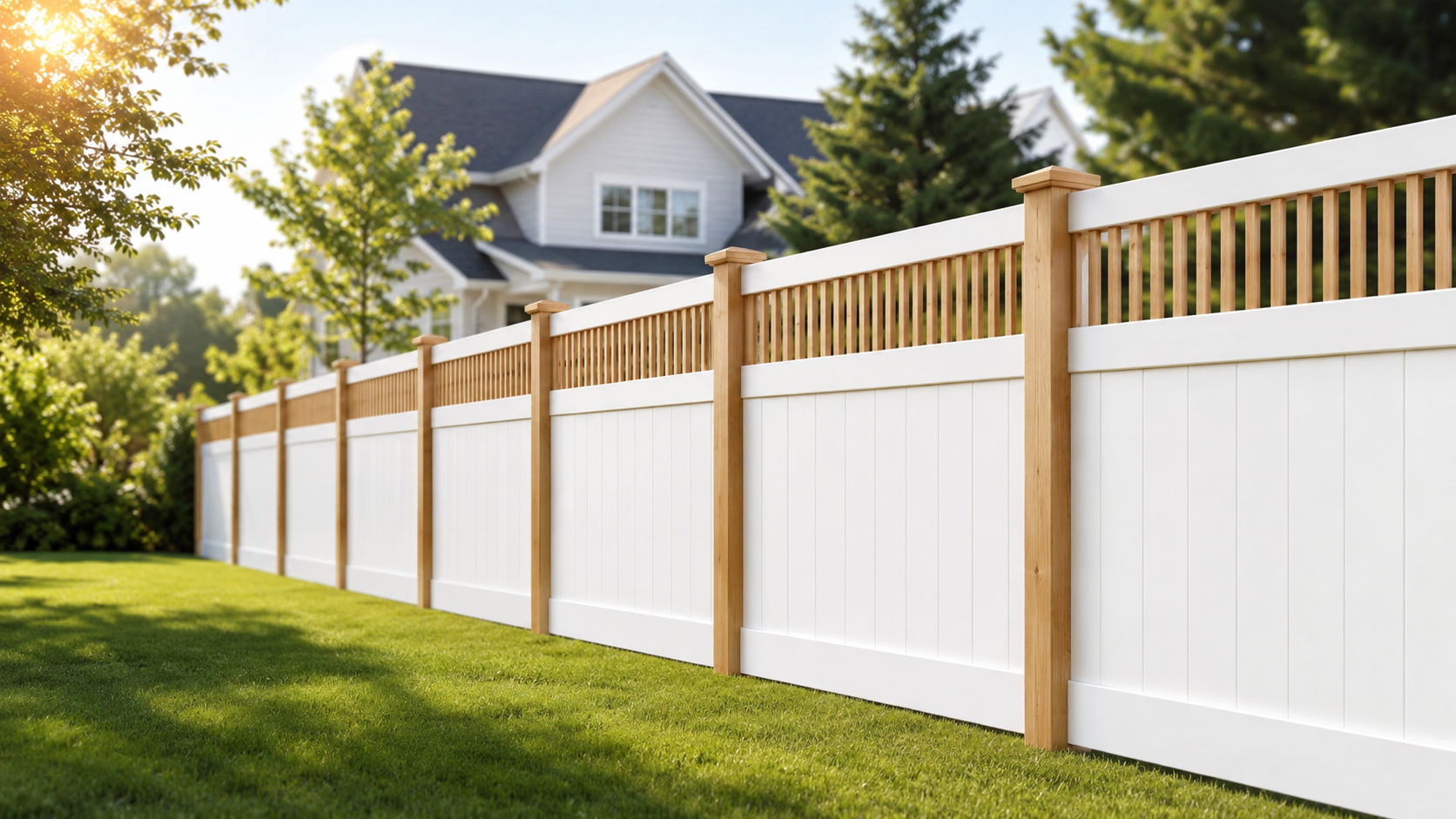
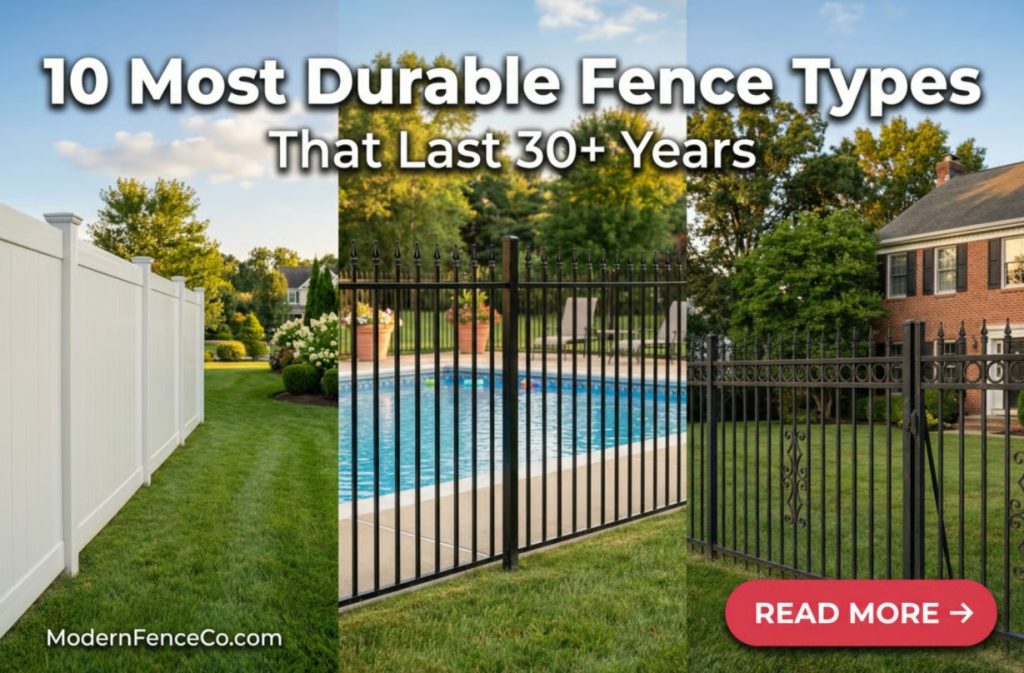
4. Vinyl (PVC) Fence (30–50 Years)
Vinyl fencing is often called the longest-lasting low-maintenance fence material — and for good reason. Made from polyvinyl chloride (PVC), it is completely immune to rot, insect damage, and moisture. It will not warp, crack, or splinter the way wood does, and it never needs painting or staining.
Modern vinyl fences have five times the tensile strength of wood and can handle New Jersey’s freeze-thaw cycles without issue. As noted in the Wikipedia article on synthetic fencing, the addition of titanium dioxide (TiO₂) and UV stabilizers in the manufacturing process has greatly improved vinyl’s durability, preventing premature aging and cracking.
Higher-gauge vinyl panels offer premium durability, and many come coated with these UV protectants to resist fading. Cleaning is as simple as hosing it down with soap and water. With over 20 privacy and picket designs available in white, tan, brown, and grey, vinyl offers the best combination of durability, aesthetics, and hassle-free ownership.
Best for: Privacy fencing, families with kids and pets, low-maintenance homeowners Average cost: $25–$45 per linear foot installed
5. Composite (WPC) Fence (25–40 Years)
Composite fencing blends recycled wood fibers with plastic polymers to create a material that looks like natural wood but performs like vinyl. It resists rot, insects, warping, and fading without needing stain or sealant. Many composite fences carry 20-year or even lifetime limited warranties from the manufacturer.
The eco-friendly angle is a bonus — most composite materials contain recycled content. Euro-style WPC panels have a sleek, modern look that works especially well on contemporary properties. The main drawback is cost, as composite tends to be pricier than both wood and vinyl.
Best for: Modern homes, eco-conscious homeowners, commercial properties Average cost: $30–$55 per linear foot installed
6. Cedar Wood Fence (20–40 Years)
Cedar is the gold standard of wood fencing. It contains natural oils called thujaplicins that make it naturally resistant to rot, decay, and insect damage without chemical treatment. Western red cedar has a beautiful reddish-brown tone that weathers to an elegant silver-grey over time if left unstained.
With regular staining every two to three years, a cedar fence can easily last 30 to 40 years. Cedar is also dimensionally stable, meaning it shrinks and warps less than other wood species. It is more expensive than pine or spruce, but the longevity justifies the investment.
Best for: Traditional homes, privacy fences, custom designs Average cost: $20–$35 per linear foot installed
7. Redwood Fence (20–35 Years)
Redwood shares many of cedar’s natural advantages, including built-in resistance to rot and insects. It is denser and stronger than cedar, which gives it better impact resistance and weight-bearing capacity. The rich, warm color of redwood is hard to match with any other material.
However, redwood is significantly more expensive than cedar and can be difficult to source in the Northeast. Like cedar, it requires regular staining and sealing to reach its maximum lifespan. Where available and budget allows, redwood produces a stunning fence that holds up remarkably well.
Best for: Premium residential properties, accent fencing Average cost: $25–$45 per linear foot installed
8. Pressure-Treated Pine Fence (15–25 Years)
Pressure-treated pine is the most affordable wood fencing option and the most widely installed across the country. The treatment process forces chemical preservatives deep into the wood fibers, which protects against rot, fungal decay, and termite damage.
While it does not last as long as cedar or redwood, a well-maintained pressure-treated pine fence can reach 20 to 25 years. Maintenance matters here — you should stain the fence within the first year after installation (once the wood dries) and re-stain every two to three years after that. Pine is also easy to customize with different heights, styles, and finishes.
Best for: Budget-friendly projects, large properties Average cost: $15–$25 per linear foot installed
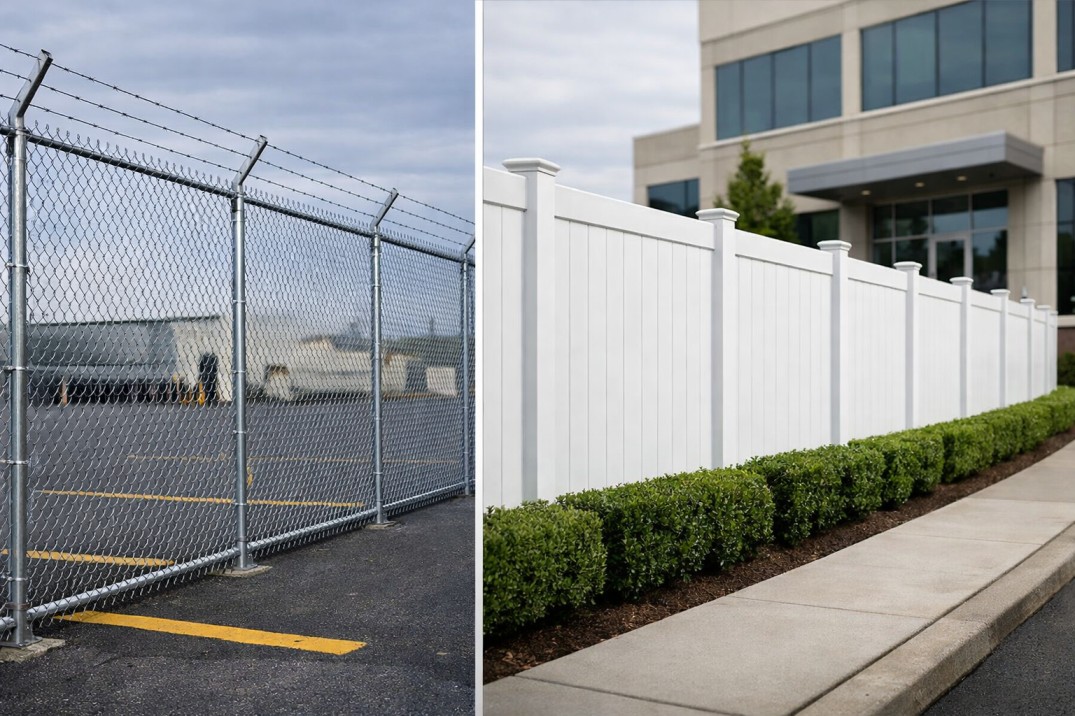
9. Chain Link Fence (15–25 Years)
Chain link may not win any beauty contests, but it is tough, affordable, and surprisingly long-lasting. Galvanized chain link resists rust well in most climates, and vinyl-coated chain link adds an extra layer of protection while offering color options like black, green, and brown.
Chain link is the most popular choice for commercial properties, sports facilities, and dog enclosures where visibility and airflow are more important than privacy. Installation is fast and straightforward, keeping labor costs low. For added privacy, slats or mesh screens can be woven through the links.
Best for: Commercial properties, pet enclosures, sports fields, budget projects Average cost: $10–$25 per linear foot installed
10. Bamboo Fence (10–20 Years)
Bamboo is the most eco-friendly fencing material available. It grows rapidly, requires no pesticides, and is completely biodegradable at the end of its life. Bamboo fences create a tropical, resort-like atmosphere and work well as decorative accents or garden borders.
However, bamboo is not as durable as other materials on this list. It is susceptible to moisture damage, insect infestation, and UV fading without regular treatment. In humid climates like New Jersey, bamboo needs to be sealed annually to prevent mold and splitting. It is best used as a secondary decorative fence rather than a primary property boundary.
Best for: Garden accents, decorative screening, eco-friendly projects Average cost: $10–$20 per linear foot installed
Quick Comparison: Fence Durability at a Glance
| Fence Type | Lifespan | Maintenance | Cost Per Foot |
|---|---|---|---|
| Wrought Iron | 50–100+ years | High (rust prevention) | $30–$60 |
| Steel (Galvanized) | 50–75 years | Low–Medium | $25–$55 |
| Aluminum | 40–70 years | Very Low | $30–$50 |
| Vinyl (PVC) | 30–50 years | Very Low | $25–$45 |
| Composite (WPC) | 25–40 years | Low | $30–$55 |
| Cedar Wood | 20–40 years | Medium | $20–$35 |
| Redwood | 20–35 years | Medium | $25–$45 |
| Pressure-Treated Pine | 15–25 years | Medium–High | $15–$25 |
| Chain Link | 15–25 years | Low | $10–$25 |
| Bamboo | 10–20 years | High | $10–$20 |
Sources: InterNACHI Life Expectancy Chart, Sierra Structures Material Comparison 2025, Cardinal Fence Durability Guide, Modern Fence Co. project data (2005–2025)
Which Durable Fence Type Is Right for You?
The best fence for your property depends on your specific priorities. If you want maximum longevity and do not mind periodic maintenance, wrought iron or steel will serve you well for generations. If low maintenance is your top concern, vinyl and aluminum are hard to beat — they require little more than an occasional rinse.
For the best balance of durability, aesthetics, and value, vinyl fencing consistently comes out on top for residential properties in New Jersey and New York. It handles our four-season climate beautifully, looks great for decades, and costs less over its lifetime than most alternatives.
At Modern Fence Co., we carry all of these fence types and can help you choose the right material based on your property, budget, and long-term goals. We have been serving New Jersey and New York homeowners since 2005 with over 5,800 completed projects and 158 five-star Google reviews. Our team of 16 installation specialists handles everything from permits to final cleanup.
Frequently Asked Questions About Durable Fencing
What is the most durable fence material? Wrought iron is the most durable fence material by raw lifespan, often lasting 50 to 100 years or more. However, vinyl is the most durable low-maintenance option since it resists rot, rust, insects, and UV damage without any painting or staining.
How long does a vinyl fence last in New Jersey? A quality vinyl fence typically lasts 30 to 50 years in New Jersey. Vinyl handles our humid summers, freezing winters, and coastal salt air without warping, cracking, or fading.
Is aluminum fencing more durable than wood? Yes, aluminum fencing lasts significantly longer than wood. Aluminum does not rust, rot, or attract insects, and most aluminum fences last 40 to 70 years with virtually no maintenance. Wood fences typically last 15 to 30 years with regular upkeep.
What is the best fence for harsh weather? For areas with heavy snow, rain, and temperature extremes, vinyl and aluminum perform best because they are immune to moisture damage and temperature-related expansion and contraction. Metal fences like steel also handle severe weather well when properly coated.
How much does a durable fence cost per foot? Durable fence costs range from $10 to $60 per linear foot depending on the material. Chain link starts around $10 per foot, vinyl averages $25 to $45, aluminum runs $30 to $50, and wrought iron can reach $60 or more. Contact Modern Fence Co. at (732) 238-5588 for a free on-site estimate.
Get a Free Fence Estimate in New Jersey
Ready to invest in a fence that will last for decades? Modern Fence Co. has been helping homeowners across New Jersey and New York choose the right fence materials since 2005. Whether you are leaning toward vinyl, aluminum, wood, or composite, our team will walk you through the options and provide a detailed, no-obligation estimate on-site.
Call us today at (732) 238-5588 or visit our showroom at 1527 Livingston Ave, North Brunswick, NJ 08902.